- MY2026
- 66 models
Electric vehicles: range, efficiency and charging cost
Of the 66 electric models rated for 2026, the Lucid Air has the longest rated range at 512 mi, 204 mi farther than the median EV (308 mi). The most efficient is the Lucid Air at 23.1 kWh/100 mi (146 MPGe), and the cheapest to charge is the Lucid Air at about $640 a year, $260 less than the median EV ($900).
EVs are rated in miles of range, kWh per 100 miles and MPGe, never in miles per gallon of gasoline. The rankings below use those units, with annual charging cost at the national residential electricity price.
Longest range
512mi
Lucid Air
Most efficient
23.1kWh/100 mi
Lucid Air
Cheapest to charge
$640/yr
Lucid Air
Median range
308mi
2026
Longest-range EVs of 2026
The 12 models with the longest rated range, with the energy each one uses. Each card opens the 2026 model page.
-
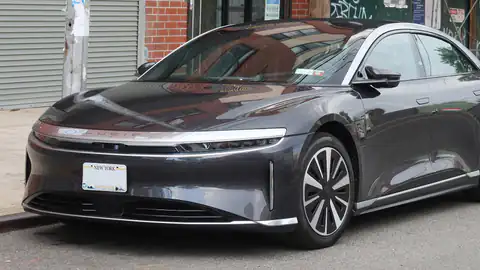
Lucid Air
512 mi · 26.4 kWh/100 mi
-

Chevrolet Silverado
493 mi · 49.5 kWh/100 mi
-
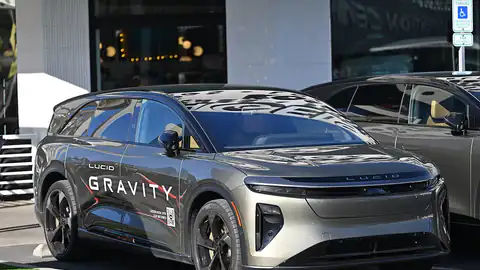
Lucid Gravity
450 mi · 31.1 kWh/100 mi
-
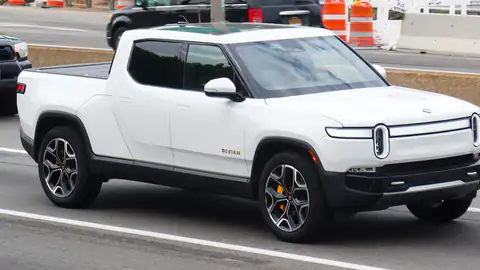
Rivian R1T
420 mi · 38.8 kWh/100 mi
-
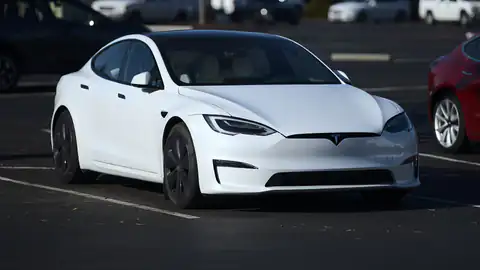
Tesla Model S
410 mi · 27.1 kWh/100 mi
-

Rivian R1S
410 mi · 39.9 kWh/100 mi
-

GMC Sierra
410 mi · 49.6 kWh/100 mi
-
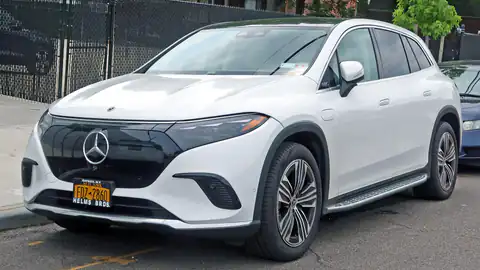
Mercedes-Benz EQS
390 mi · 34.0 kWh/100 mi
-

Mercedes-Benz CLA-Class
374 mi · 27.0 kWh/100 mi
-
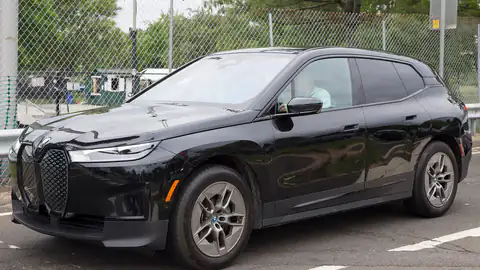
BMW iX
364 mi · 34.7 kWh/100 mi
-
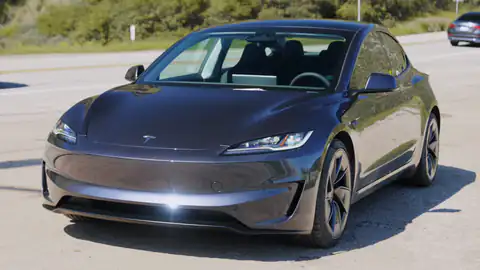
Tesla Model 3
363 mi · 24.6 kWh/100 mi
-
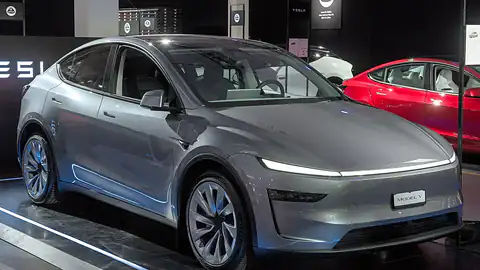
Tesla Model Y
357 mi · 25.2 kWh/100 mi
How to read EV ratings
Three numbers describe an electric car. Each one comes straight from the window sticker.
MPGe
MPGe is how far an EV travels on 33.7 kWh, the energy in one gallon of gasoline. It lets you compare an EV's efficiency with a gasoline car, but it says nothing about price: electricity and gasoline cost different amounts per unit.
kWh per 100 miles
The energy the car draws from the grid over 100 miles, so lower is better. The most efficient 2026 EV, the Lucid Air, uses 23.1 kWh/100 mi; the median EV uses 33.0 kWh/100 mi.
Range
Miles on a full charge from the standardized label test. Real-world range depends on speed, temperature and load. The median 2026 EV is rated at 308 mi, and the top 10 run from 512 mi to 364 mi.
Charging cost
At 18.3¢/kWh (U.S. residential average) and 15,000 miles a year, the Lucid Air costs about $640 a year to charge. Your own cost depends on your local rate and on how much you charge away from home.
EV rankings
The range and efficiency lists cover MY2013 onward (the charging-cost list MY2022 onward), one row per model with its best configuration.
- Electric Cars With the Longest Range Every electric vehicle ranked by range on a full charge, with kWh per 100 miles and charging cost. 2026 leader: Lucid Air (512 mi) · MY2013 to MY2027
- Most Efficient Electric Cars Every electric vehicle ranked by energy use in kWh per 100 miles, with MPGe, range and charging cost. 2026 leader: Lucid Air (23.1 kWh/100 mi) · MY2013 to MY2027
- Cheapest EVs to Charge Electric vehicles ranked by annual charging cost at the national residential electricity price. 2026 leader: Lucid Air ($640) · MY2022 to MY2027
- Cheapest Vehicles to Fuel Gas, hybrid, plug-in hybrid, diesel and electric models ranked by annual fuel or charging cost. 2026 leader: Lucid Air ($640) · MY2000 to MY2027
- Plug-In Hybrids With the Longest Electric Range Plug-in hybrids ranked by all-electric range, with total range and annual cost. 2026 leader: Mitsubishi Outlander (44 mi) · MY2022 to MY2026
Charging cost by state
The same EV costs more or less to charge depending on where you live: residential electricity prices differ widely between states. See what a year of charging costs in every state.
Charging cost by statePlug-in hybrids
Plug-in hybrids run on electricity first and gasoline after that, so they are rated separately: electric range plus a gasoline rating. They have their own ranking.
Plug-in hybrids by electric rangeFrequently asked questions
Which EV has the longest range in 2026?
The Lucid Air is rated at 512 mi on a full charge, 204 mi more than the median EV (308 mi). See the full range ranking.
How much does it cost to charge an EV for a year?
At the U.S. residential average of 18.3¢/kWh and 15,000 miles a year, the cheapest 2026 EV costs about $640 a year to charge and the median EV about $900. Local rates differ: see charging cost by state.
What does MPGe mean?
MPGe is the distance an EV travels on 33.7 kWh, the energy content of a gallon of gasoline. It is useful for comparing EVs with each other and with gasoline cars on energy, not on cost.
Is a lower kWh per 100 miles better?
Yes. It is the energy used to drive 100 miles, so a lower number means a more efficient car and a lower charging bill. See the efficiency ranking.
How many EVs are rated for 2026?
66 electric models had been rated for 2026 as of Sep 29, 2026. MY2027 is still partial, so its numbers will change.
Are plug-in hybrids counted as EVs here?
No. Plug-in hybrids also burn gasoline, so they are ranked separately by electric range.