- Electric vehicles
- MY2017
Most Efficient Electric Cars of 2017
The most efficient 2017 EV is the Hyundai Ioniq (Electric · FWD), which uses 25.0 kWh/100 mi (136 MPGe), 5.0 kWh/100 mi less than the median EV (30.0 kWh/100 mi) among the 16 EVs ranked. The Hyundai Ioniq costs about $690 a year to charge, $130 less than the median EV ($820).
The top 10 run from 25.0 kWh/100 mi to 31.0 kWh/100 mi. Each model is listed once, with its best qualifying configuration named in the row; models with the same displayed value share a rank.
Lowest energy use
25.0kWh/100 mi
Hyundai Ioniq
Median model
30.0kWh/100 mi
16 models
Top-10 median
29.2kWh/100 mi
Models ranked
16
one row per model
Full ranking
All 16 models. Every column is sortable.
| 1 |  | 25.0 | 136 | 124 | $690 | −5 |
| 2 |  | 26.8 | 126 | 310 | $740 | −3.2 |
| 3 |  | 27.0 | 124 | 81 | $740 | −3 |
| 4 |  | 28.3 | 119 | 238 | $780 | −1.7 |
| 5 |  | 28.4 | 119 | 125 | $780 | −1.6 |
| 6 |  | 30.0 | 112 | 107 | $820 | 0 |
| 6 |  | 30.0 | 114 | 89 | $820 | 0 |
| 6 |  | 30.0 | 112 | 84 | $820 | 0 |
| 6 |  | 30.0 | 112 | 59 | $820 | 0 |
| 10 |  | 31.0 | 107 | 115 | $850 | +1 |
| 10 |  | 31.0 | 108 | 58 | $850 | +1 |
| 12 | 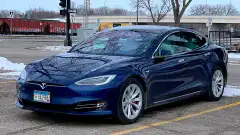 | 32.0 | 104 | 294 | $880 | +2 |
| 12 |  | 32.0 | 105 | 93 | $880 | +2 |
| 14 |  | 36.0 | 93 | 238 | $990 | +6 |
| 15 |  | 40.2 | 84 | 87 | $1,100 | +10.2 |
| 16 |  | 47.0 | 72 | 187 | $1,290 | +17 |
How this list is built
Every line below is read from the list definition that produced the table.
- Classes: every EPA class except special-purpose vehicles.
- Powertrains: Electric.
- Ranked by energy use (kWh per 100 miles), lowest first.
- One row per model (make and model): the configuration that ranks best in this list is shown, with its trim, engine and drive named in the row.
- Ties are decided on the displayed value (whole miles, kWh per 100 miles to one decimal, cost rounded to $10): tied models share a rank, then are ordered by a tie-breaker and by name.
- Special-purpose vehicles, such as heavy-duty variants, are excluded.
- Model years MY2013 to MY2027; a year is listed only when at least 10 models qualify.
Data and period
- EPA ratings: fueleconomy.gov file of Sep 29, 2026
- Prices: EIA regular gasoline, U.S. average, Sep 2026 ($4.36/gal); residential electricity, U.S. average, Jul 2026 (18.3¢/kWh)
- 15,000 miles a year, 55% city and 45% highway
Frequently asked questions
Which 2017 EV is the most efficient?
The most efficient 2017 EV is the Hyundai Ioniq (Electric · FWD), which uses 25.0 kWh/100 mi (136 MPGe), 5.0 kWh/100 mi less than the median EV (30.0 kWh/100 mi) among the 16 EVs ranked. The Hyundai Ioniq costs about $690 a year to charge, $130 less than the median EV ($820).
How much does the Hyundai Ioniq cost to charge per year?
About $690 a year at 15,000 miles a year, using the prices stamped at the bottom of this page. The median EV in this list costs $820 a year.
How many EVs are ranked for 2017?
16 models qualify, one row each. The median is 30.0 kWh/100 mi, and the top 10 run from 25.0 kWh/100 mi to 31.0 kWh/100 mi.
How are ties, trims and drivetrains handled?
Each model appears once, with the configuration that ranks best in this list; its trim, engine and drive are named in the row. Models with the same displayed value share a rank (1, 2, 2, 4) and are then ordered by a tie-breaker and by name. See the methodology.
What are MPGe and kWh per 100 miles?
MPGe is how far an EV goes on 33.7 kWh, the energy in a gallon of gasoline. kWh per 100 miles is the energy it uses over 100 miles, so lower is better. See the EV hub.