- Electric vehicles
- MY2016
Electric Cars With the Longest Range in 2016
The 2016 EV with the longest EPA range is the Tesla Model S (- P100D · AWD) at 315 mi on a full charge, 231 mi farther than the median EV (84 mi) among the 13 EVs ranked. The Tesla Model S costs about $960 a year to charge, $90 more than the median EV ($870).
The top 10 run from 315 mi to 81 mi. Each model is listed once, with its best qualifying configuration named in the row; models with the same displayed value share a rank.
Longest range
315mi
Tesla Model S
Median model
84mi
13 models
Top-10 median
90mi
Models ranked
13
one row per model
Full ranking
All 13 models. Every column is sortable.
| 1 | 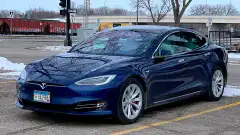 | 315 | 35.0 | 98 | $960 | +231 |
| 2 | 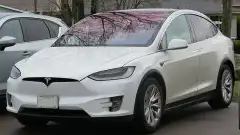 | 289 | 39.0 | 86 | $1,070 | +205 |
| 3 |  | 187 | 47.0 | 72 | $1,290 | +103 |
| 4 | 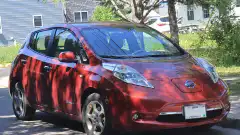 | 107 | 30.0 | 112 | $820 | +23 |
| 5 |  | 93 | 32.0 | 105 | $880 | +9 |
| 6 |  | 87 | 40.2 | 84 | $1,100 | +3 |
| 7 |  | 84 | 30.0 | 112 | $820 | 0 |
| 8 |  | 83 | 29.2 | 116 | $800 | −1 |
| 9 |  | 82 | 28.3 | 119 | $780 | −2 |
| 10 |  | 81 | 27.0 | 124 | $740 | −3 |
| 11 |  | 76 | 32.0 | 105 | $880 | −8 |
| 12 |  | 68 | 31.5 | 107 | $870 | −16 |
| 13 |  | 62 | 30.0 | 112 | $820 | −22 |
How this list is built
Every line below is read from the list definition that produced the table.
- Classes: every EPA class except special-purpose vehicles.
- Powertrains: Electric.
- Ranked by EPA range, highest first.
- One row per model (make and model): the configuration that ranks best in this list is shown, with its trim, engine and drive named in the row.
- Ties are decided on the displayed value (whole miles, kWh per 100 miles to one decimal, cost rounded to $10): tied models share a rank, then are ordered by a tie-breaker and by name.
- Special-purpose vehicles, such as heavy-duty variants, are excluded.
- Range is the EPA label value from standardized laboratory tests; real-world range varies with speed, weather and load.
- Model years MY2013 to MY2027; a year is listed only when at least 10 models qualify.
Data and period
- EPA ratings: fueleconomy.gov file of Sep 29, 2026
- Prices: EIA regular gasoline, U.S. average, Sep 2026 ($4.36/gal); residential electricity, U.S. average, Jul 2026 (18.3¢/kWh)
- 15,000 miles a year, 55% city and 45% highway
Frequently asked questions
Which 2016 EV has the longest range?
The 2016 EV with the longest EPA range is the Tesla Model S (- P100D · AWD) at 315 mi on a full charge, 231 mi farther than the median EV (84 mi) among the 13 EVs ranked. The Tesla Model S costs about $960 a year to charge, $90 more than the median EV ($870).
How much does the Tesla Model S cost to charge per year?
About $960 a year at 15,000 miles a year, using the prices stamped at the bottom of this page. The median EV in this list costs $870 a year.
How many EVs are ranked for 2016?
13 models qualify, one row each. The median is 84 mi, and the top 10 run from 315 mi to 81 mi.
How are ties, trims and drivetrains handled?
Each model appears once, with the configuration that ranks best in this list; its trim, engine and drive are named in the row. Models with the same displayed value share a rank (1, 2, 2, 4) and are then ordered by a tie-breaker and by name. See the methodology.
What are MPGe and kWh per 100 miles?
MPGe is how far an EV goes on 33.7 kWh, the energy in a gallon of gasoline. kWh per 100 miles is the energy it uses over 100 miles, so lower is better. See the EV hub.